
According to Ofcom’s most recent Media Use and Attitudes Report, roughly 55% of 3-17-year-olds in the UK are using WhatsApp as their primary messaging service  Not only does that make WhatsApp the most popular messaging platform among children and young people in the UK; it also means that of the app’s approximately three billion users, over seven million of them are British youngsters – keeping in touch with friends and family, but also being exposed to its various risks
As parents and educators, it’s our responsibility to stay up-to-date on the safety concerns around this highly popular app, and know how to protect children and young people who are on the platform  That’s why we’ve put together this expert-led free guide, breaking down WhatsApp’s most prominent risks and advising you on how best to safeguard the app’s younger users.
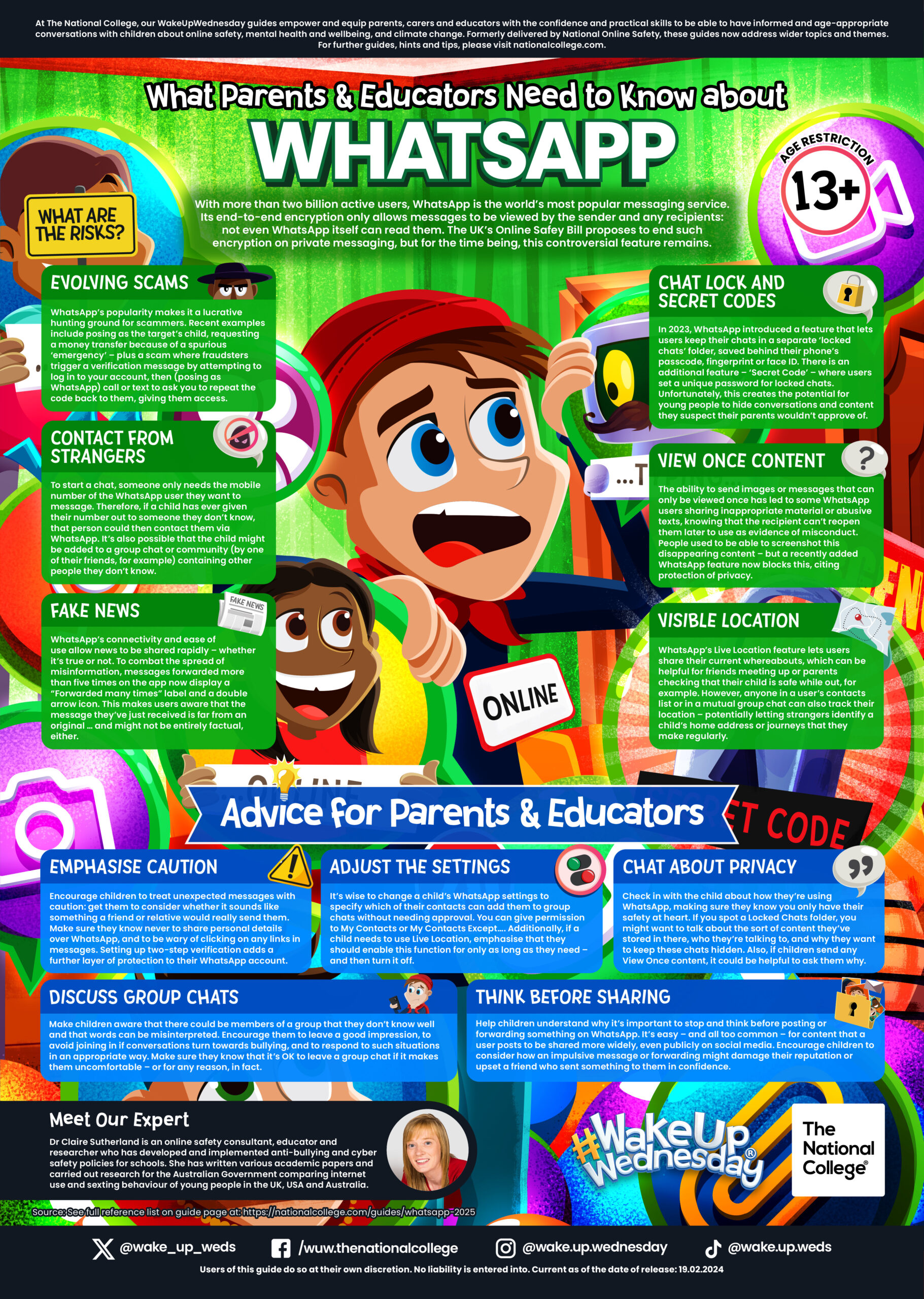
WhatsApp is one of the most popular messaging apps available and, as of 2024, has been made accessible to users as young as thirteen. With end-to-end encryption preventing even the platform itself from viewing any messages that users send on it, this app has been regularly utilised by those looking to keep their conversations private.
Unfortunately, the service poses several risks to its younger users – from misinformation and bullying to potential criminal exploitation – and it’s vital that parents and educators understand these concerns and how to address them. This free guide delves into the online safety risks of WhatsApp and offers expert advice on how to safeguard any young people who use the platform.