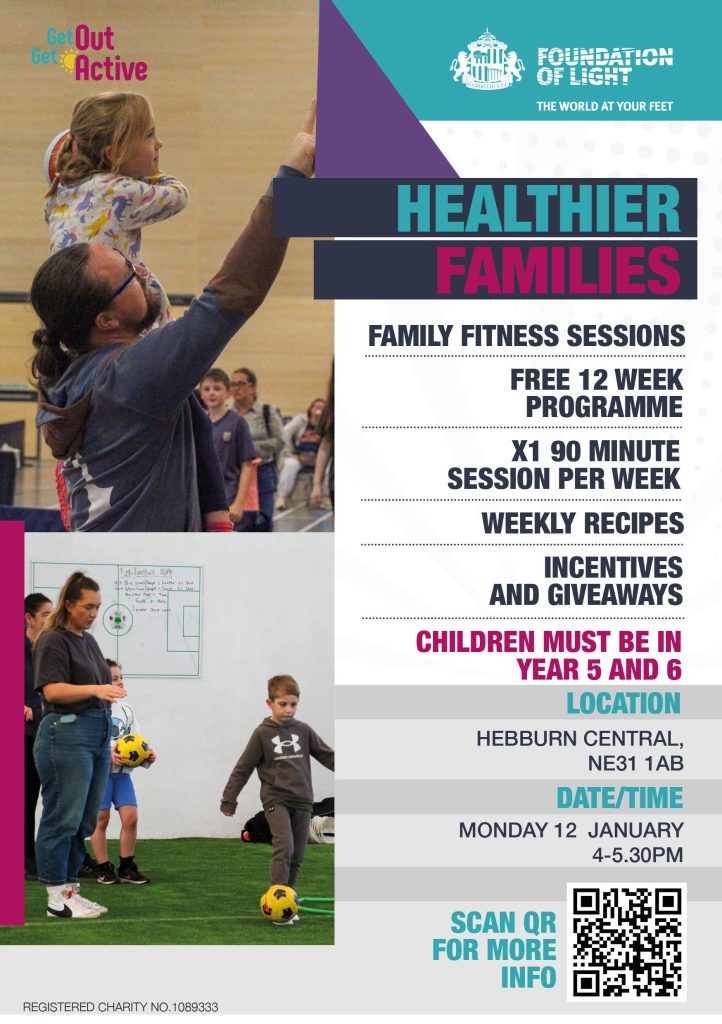
The Foundation of Light are offering a free 12-week course for families of children in years 5 and 6 in South Tyneside. There will be one 90-minute session per week, which include family fitness sessions, healthy eating advice, fun giveaways and incentives. The course begins on Monday 12th January, but parents/carers can sign up for later sessions if they can’t make the first ones.
We had a fantastic Christmas party. We played various party games, sang songs and danced. We also had some lovely food and a delicious cupcake!!!
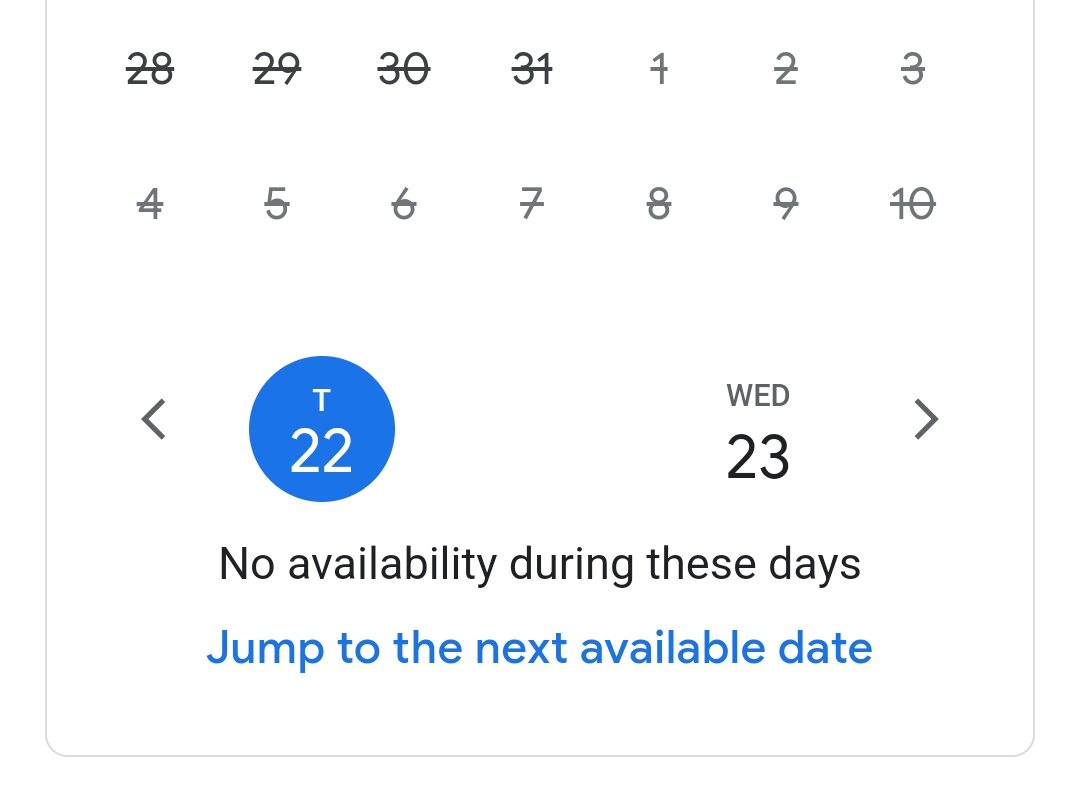
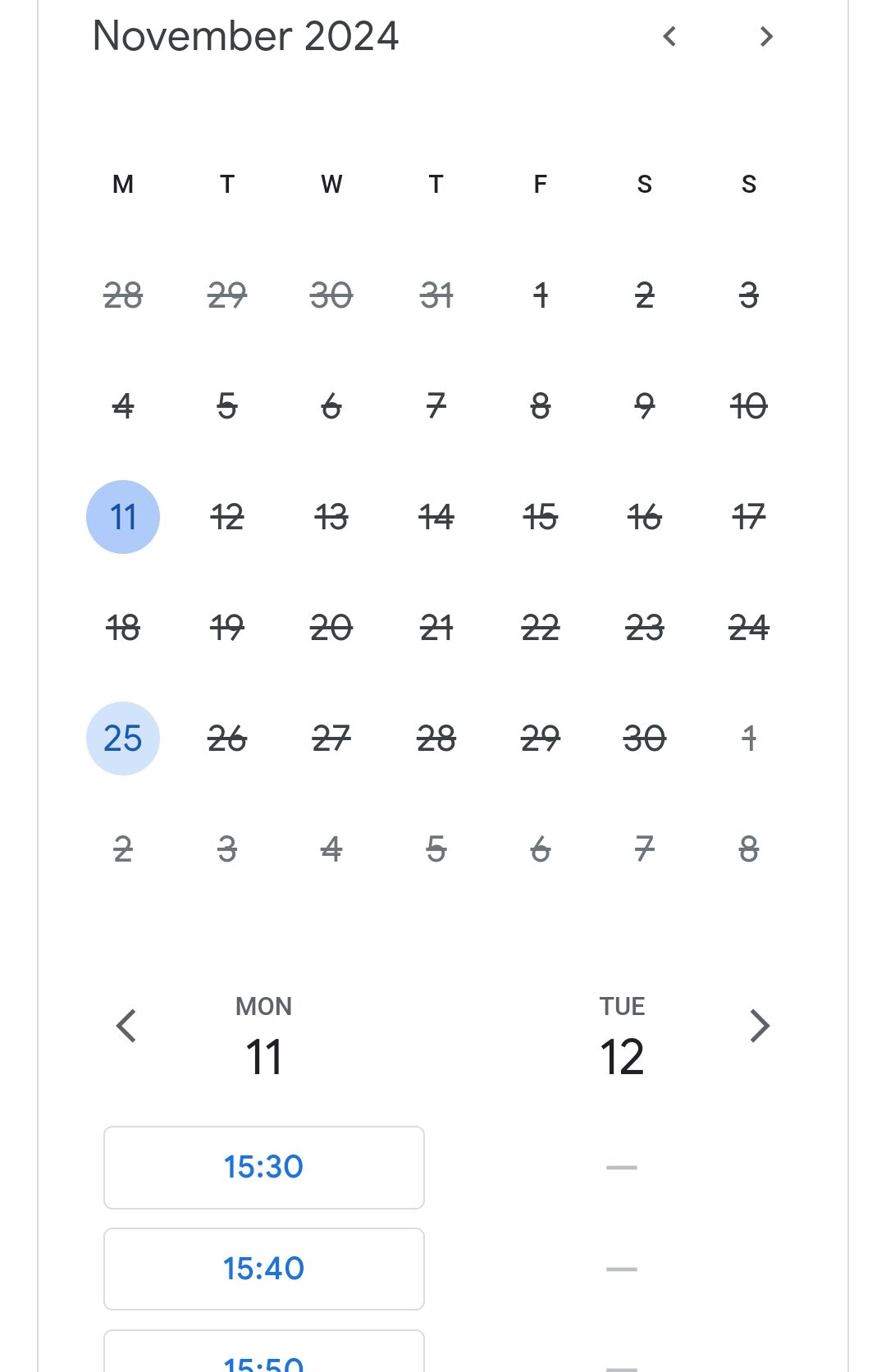
To book an appointment for your child, click on the name of their teacher. At the bottom of the window, click ‘Jump to the next available date‘ and choose either the 10th or 17th of November and select the available time you would like to see the teacher and fill in the fields displayed. If your child is in Year 5 or 6 and is taught by Mr Forster or Mr Steadman, please book with them.
The school are unable to book appointments. Please only contact the school to cancel appointments that are made by mistake or if you are unable to attend.
Visual references of steps:
Links to booking system:
| Nursery | |
| Miss Hamilton Mrs Dalton Mrs Beattie | |
| Reception | |
| Miss Pattison Mrs Moore Mrs Smith | |
| Year 1 | |
| Miss Mullea Mrs Twigge Mrs Kirkham | |
| Year 2 | |
| Mrs Jones Mrs Wilkinson Mrs Pottinger/Whitfield | |
| Year 3 | |
| Mrs Hawkins Mrs Clarke Mrs Wakefield | |
| Year 4 | |
| Mrs Wright Mrs Davis Mrs Langley | |
| Year 5 | |
| Miss Booth Miss Errington Mrs Trotter Mr Forster |
Due to Mr Thompson’s absence, Year 6 parents will need to book new appointments with the morning class teacher – the teacher your child has for literacy and numeracy.
| Year 6 Morning Groups | |||
| Mrs Fawkes | Mr Dawson | Mr Steadman | Mrs Allen |
Please send your child into school with any cans or dried foods that you can spare for our second Canny Friday of October tomorrow. Our local food bank really will appreciate every single one of them.
AI can be an amazing tool for education and creativity – sadly, it’s also become a tool for online scammers ![]()
This week’s #WakeUpWednesday guide shines a light on the dark side of using AI, including phishing emails, fake voice calls, and influencer-based frauds targeting younger users ![]()
![]()
From deepfake videos to romance scams powered by chatbots ![]()
the tactics are getting more convincing – and the consequences more serious. If you’re looking to help children and young people navigate the online world with confidence and caution, this guide offers key insights and practical advice to keep them safe ![]()
![]()
AI isn’t just transforming the way we learn and work, it’s also reshaping the tactics scammers use online. From generating convincing phishing emails to fabricating influencer videos, criminals are using AI to make their scams more convincing than ever. Young people, who often embrace new tech quickly, can be especially vulnerable.
This guide highlights several AI-enabled dangers – including romance scams, deepfake audio and video impersonations, and fake job offers – and explains how to spot and report them. With clear tips for verifying content, thinking critically, and using trusted platforms, it’s essential reading for parents and educators to help young people stay one step ahead of the scammers.
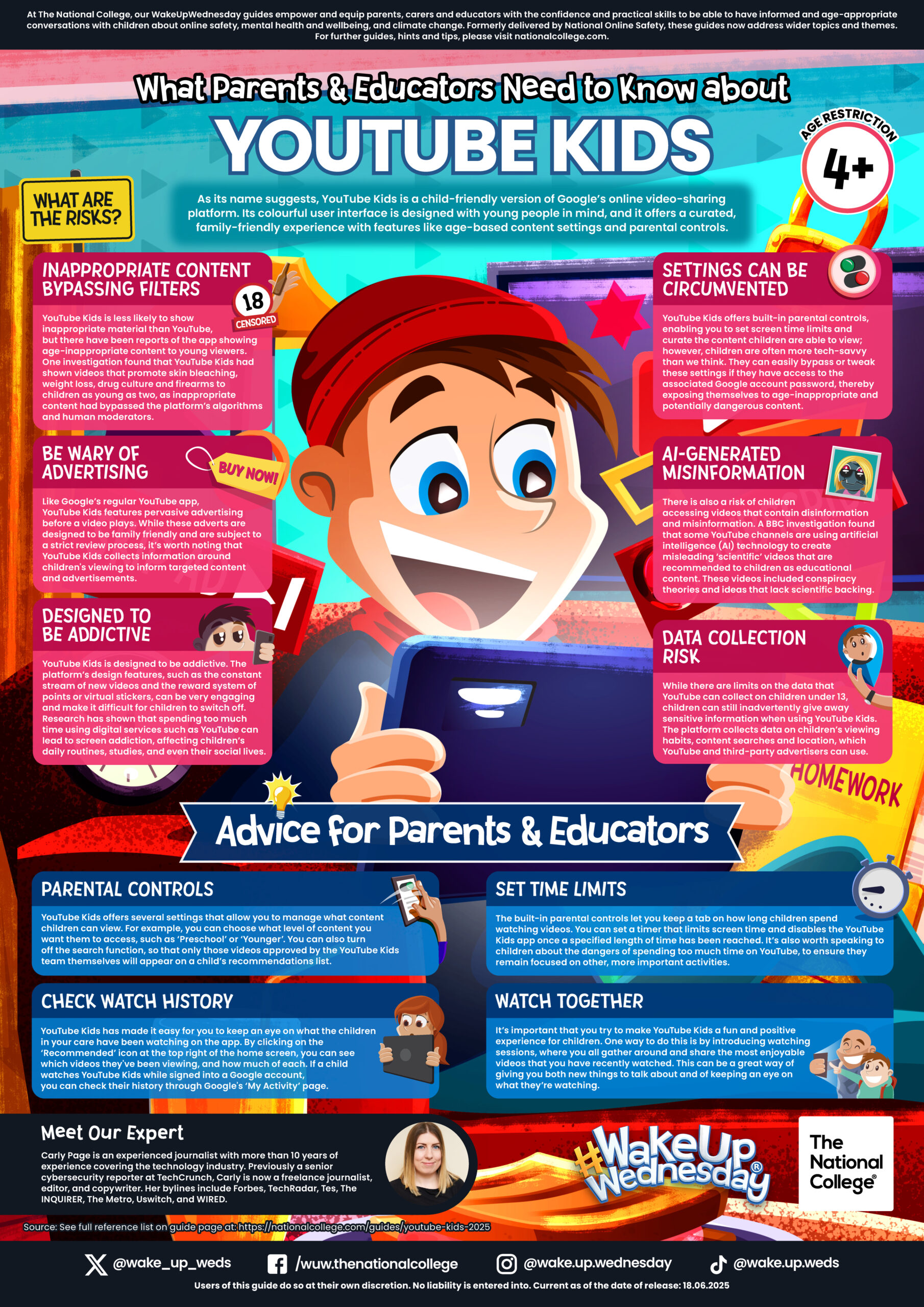
YouTube Kids is designed to be the safer cousin of the regular YouTube app; however, built-in risks continue to pose concerns
From targeted advertising to addictive design, there’s more going on behind the scenes than many realise. This week’s #WakeUpWednesday guide breaks it all down.
Whether it’s inappropriate content slipping past filters or tech-savvy kids bypassing parental settings, YouTube Kids still needs careful oversight. Our guide provides clear, easy-to-follow tips to help adults keep young users protected while still enjoying their favourite videos ![]()
![]()
YouTube Kids promises a safe, child-centric experience with colourful visuals, age-filtered content, and robust parental controls. Designed to appeal to younger viewers, the app has grown rapidly, being used by tens of millions of children worldwide. But is it as safe as it seems?
Despite YouTube Kids’ safeguards, reports have highlighted worrying issues, such as inappropriate content slipping through filters, subtle advertising, and the use of manipulative design to keep children engaged. Our guide explores how to navigate these pitfalls, offering practical advice for making sure children get the most from the platform – without the risks.
https://nationalcollege.com/

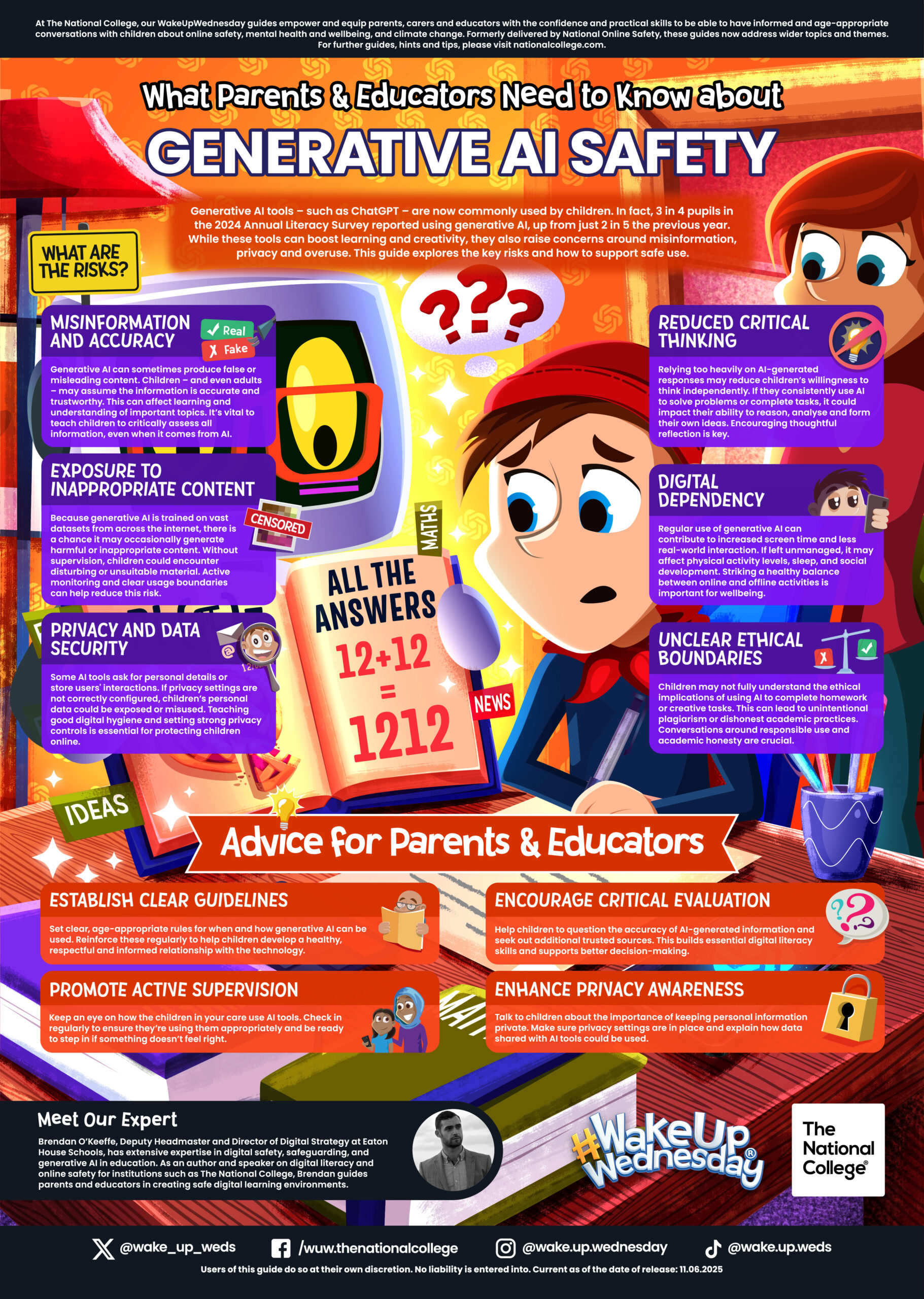
Generative AI can be a brilliant tool for creativity and learning ![]()
– but it’s not without its hazards. With 3 in 4 pupils now using generative AI (up from just 2 in 5 last year!), it’s more important than ever for parents and educators to understand the risks ![]()
This week’s free #WakeUpWednesday guide breaks down the key safety concerns around generative AI tools and offers expert advice for keeping young users safe. From encouraging critical thinking to safeguarding their privacy, find out how to help children use AI safely and smartly ![]()
The remarkable growth of generative AI tools like ChatGPT has opened up exciting new opportunities for young learners. Used wisely, AI can be a powerful ally in boosting creativity, learning and problem-solving skills. However, without proper guidance, young people may stumble into challenges including inaccurate information, data security risks, and a growing reliance on AI over their own critical thinking.
From setting clear usage boundaries to teaching digital hygiene and promoting independent thought, this guide offers parents and educators practical advice on the safe, positive use of AI. With the right understanding and guidance, you can ensure that generative AI becomes a positive influence, rather than a potential pitfall in young people’s digital lives.
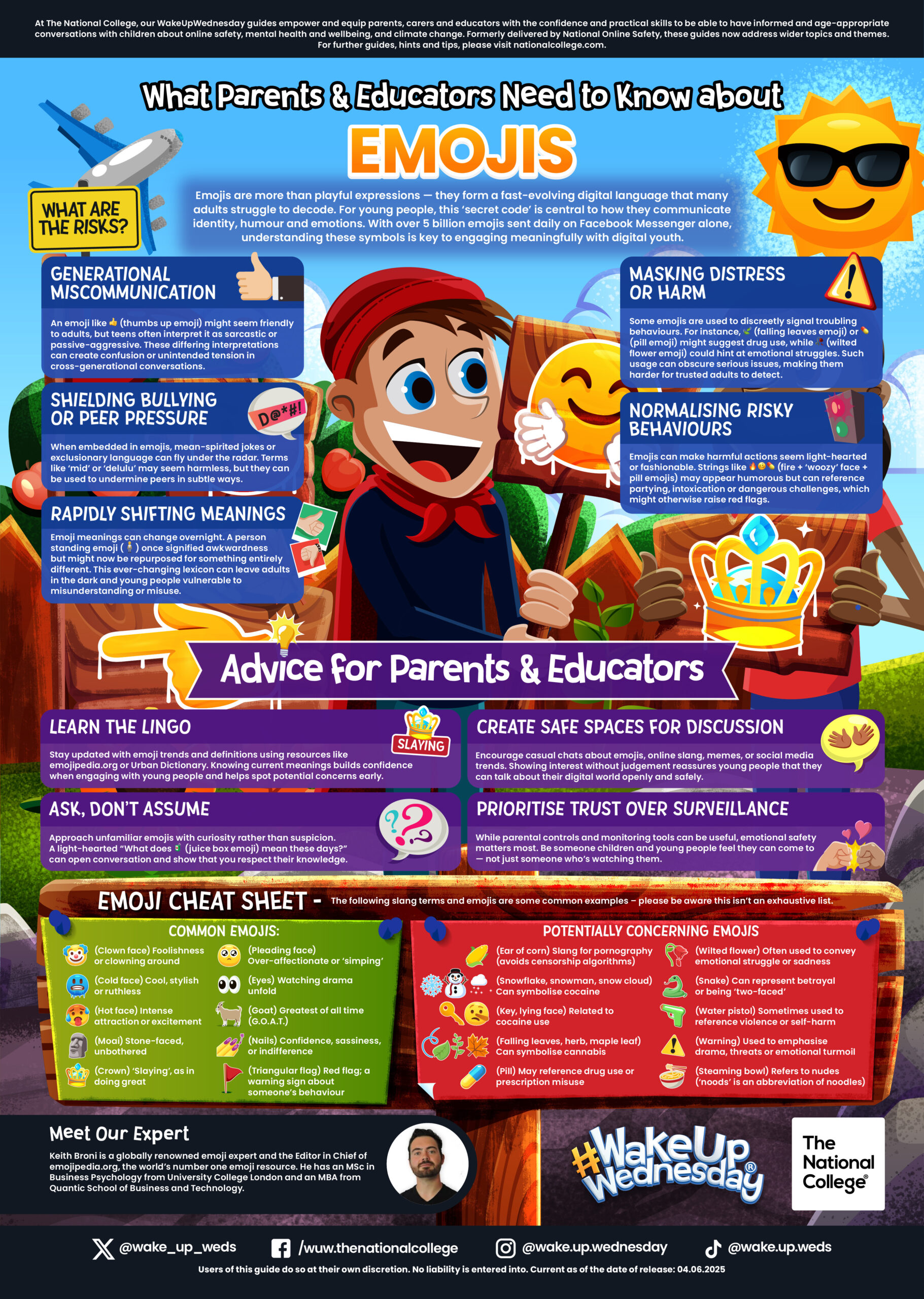
They say a picture’s worth a thousand words and when it comes to emojis, that’s often true ![]()
![]()
But in the wrong context, these innocent-seeming icons can take on a whole new meaning, sometimes hinting at things that aren’t as light-hearted as they appear.
This week’s #WakeUpWednesday guide breaks down some of the slang and symbols young people use online and explains how some could be masking real issues, from bullying and exclusion to harmful behaviours![]()
. With our handy cheat sheet and top tips, adults can keep pace with this ever-changing digital language ![]()
![]()
Emojis aren’t just digital decoration — they’re often used as a coded language that young people use to express identity, humour and emotion. Without context, they can easily be misunderstood by adults, leading to confusion or missed signals. Some emojis may even mask risky behaviours or emotional struggles.
This guide helps decode this ever-evolving language, empowering parents and educators to have more open, informed conversations with the children in their care. It also highlights the meaning of some common emojis and offers practical tips for staying clued-in without snooping or suspicion.
https://nationalcollege.com/

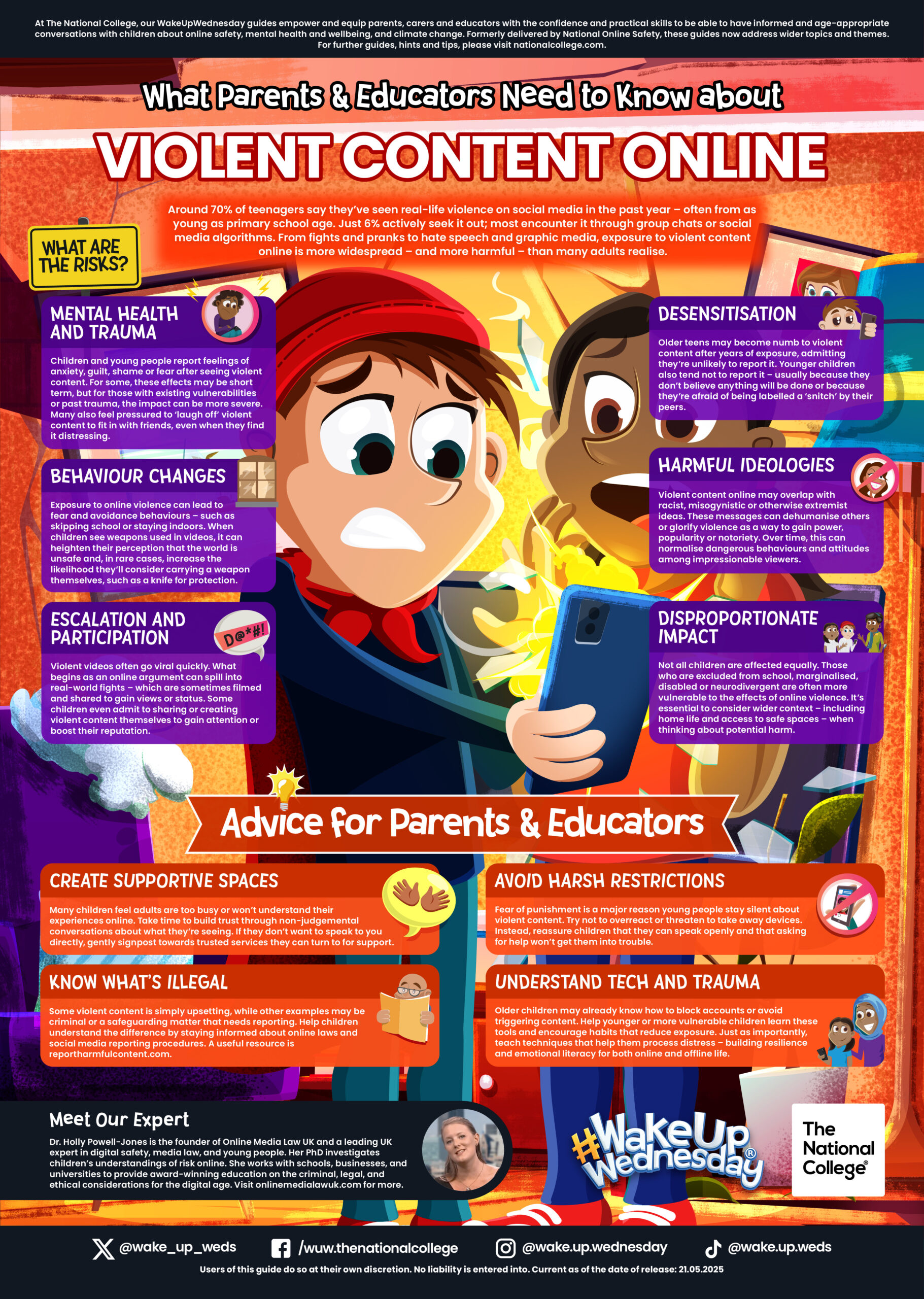
Around 70% of teenagers say they’ve seen real-life violence on social media in the past year. Violent content online isn’t just something young people are occasionally stumbling across – in many cases, it’s becoming a routine part of their digital world
. From fights
and stabbings
to toxic ideologies
, disturbing videos are often just a click away on social media or group chats. Many children don’t go looking for this material, it finds them via algorithms or peer sharing.
This week’s #WakeUpWednesday guide highlights the unseen risks this poses to children’s mental health
, sense of safety
, and social behaviours. With insights from a leading expert
, it offers practical ways for parents and educators to respond with empathy
and support
– not punishment or panic
.
The guide outlines key concerns, including the mental toll of repeated exposure, shifts in behaviour, and the worrying normalisation of harmful ideologies. It also explains how such content can escalate from screen to street, and why some young people may feel pressured to share or even create violent media themselves.
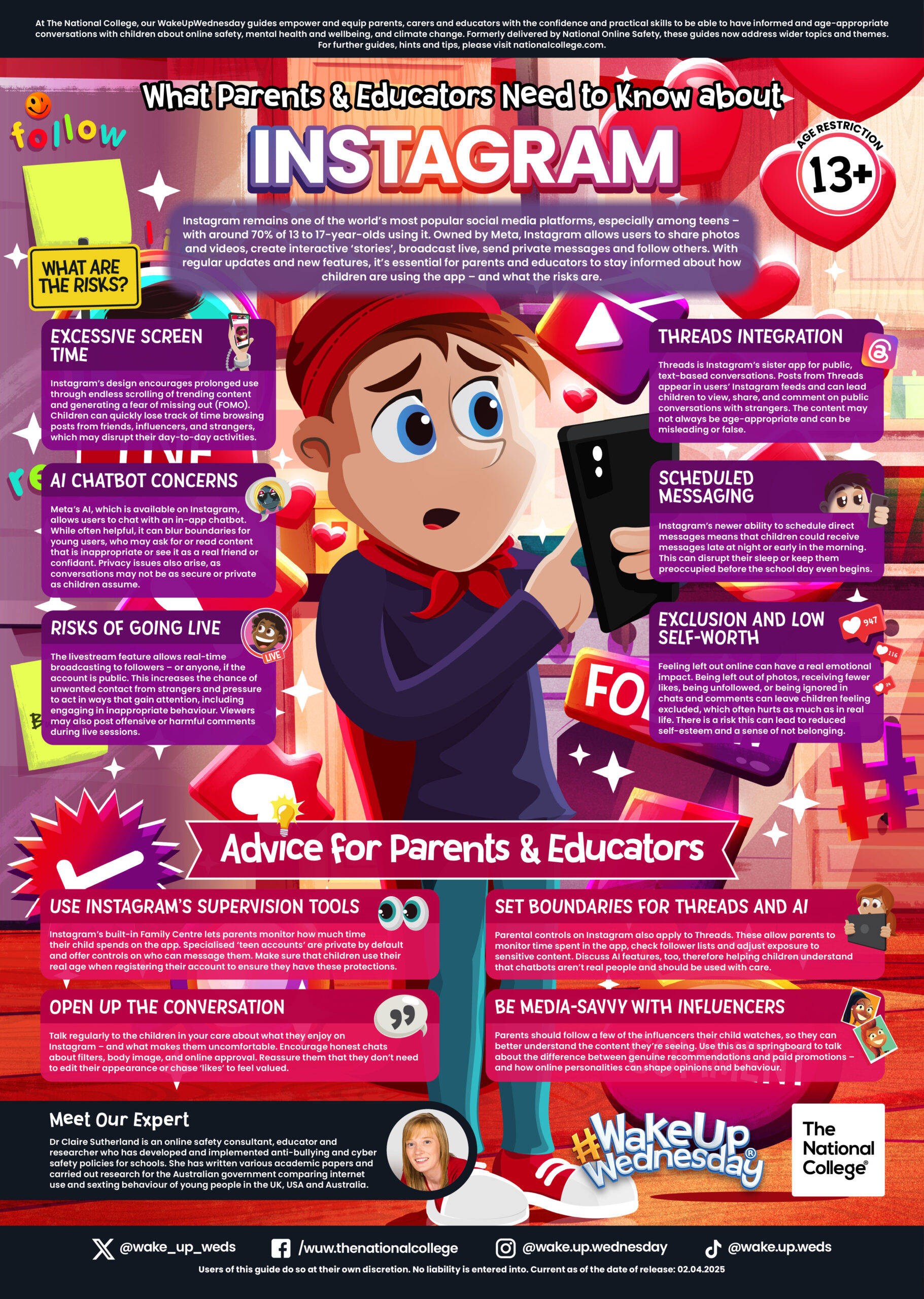
Instagram
remains one of the world’s most popular social media platforms, especially among teens – used by around 70% of 13 to 17-year-olds.
It may be one of the most familiar social media names around but features like AI-powered chatbots and Threads integration have added fresh challenges for families and schools to navigate
From worrying livestreams to issues like social exclusion and fear of missing out, Instagram isn’t just about photos. As the platform evolves, so too must the conversations we have with young people about how they use it ![]()
![]()
Our latest #WakeUpWednesday guide outlines what these new features involve, the possible risks they bring and how to make the most of Instagram’s parental controls to keep children safe online. ![]()
Instagram remains a go-to app for teens, with its endless stream of photos, videos, and ‘Stories’ keeping young users constantly connected. From influencer content to live broadcasts, the platform is packed with evolving features that can feel fun and engaging – but can also raise some serious concerns around screen time, online pressures and exposure to inappropriate content.
We’ve created this free guide – also available in podcast format – offering parents and educators up-to-date knowledge on the risks and safety tips for this latest version of Instagram.