It’s a description of encryption proscription! 
 The world’s most popular instant messaging service, WhatsApp has been appearing in the headlines even more often than usual recently over its opposition to aspects of the UK government’s Online Safety Bill
Encrypting messages to protect users’ privacy has undeniable merit, but it also poses obvious risks – especially to young people. Updated to reflect the newest version of WhatsApp, today’s #WakeUpWednesday guide brings trusted adults the latest essential info.
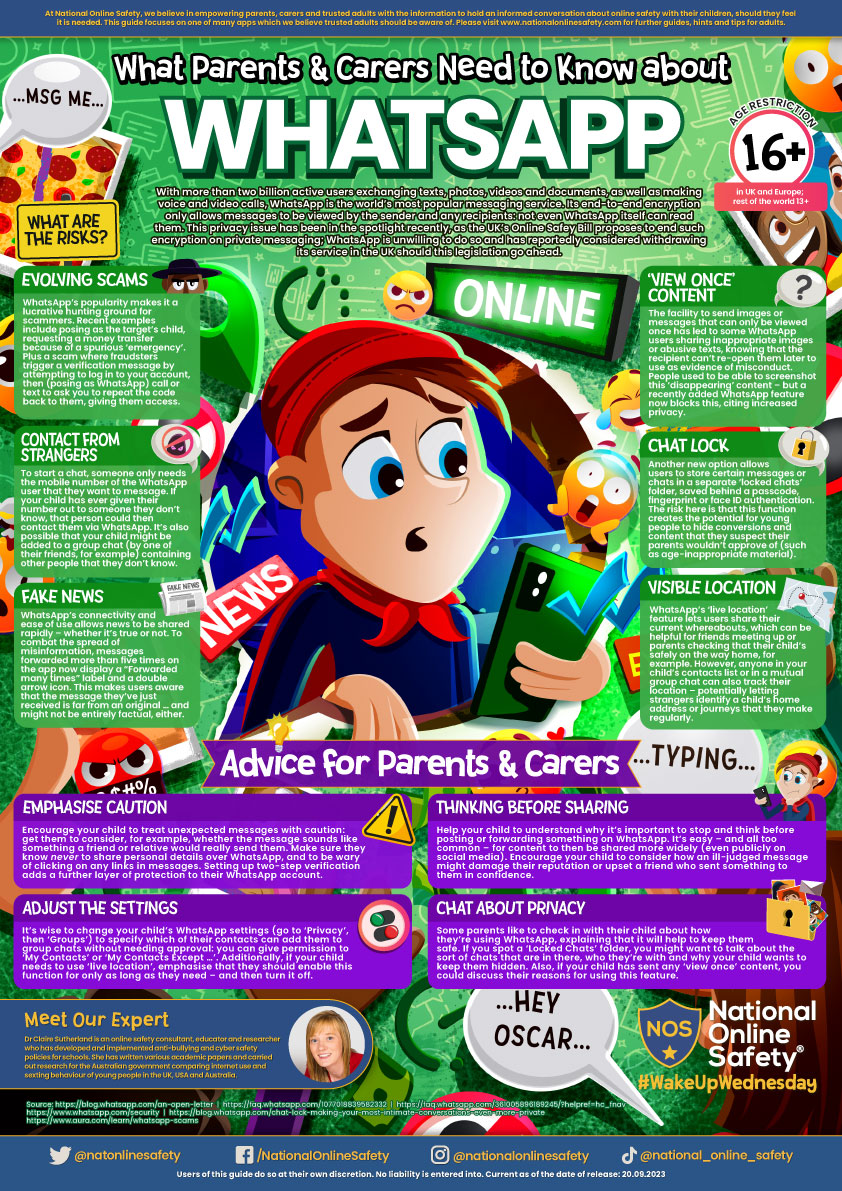
WhatsApp is the most widely used messaging platform on the planet, with over two billion users (forecast to become three billion by 2025), across more than 180 countries. The majority of those people (70%) open the app at least once a day – but what exactly are they seeing? Contact from strangers, fake news and convincing scams are all among the service’s well-documented hazards.
According to Ofcom, WhatsApp is used by more than half of 3- to 17-year-olds in the UK (including one in three from the 8–11 bracket), despite its 16+ age restriction. If your child hops onto WhatsApp to stay in touch with friends or family, our updated #WakeUpWednesday guide to the service contains the key details you’ll need to support them in doing it safely.

 While 55% of parents of young gamers worry that their child might be pressured into making expensive in-game purchases


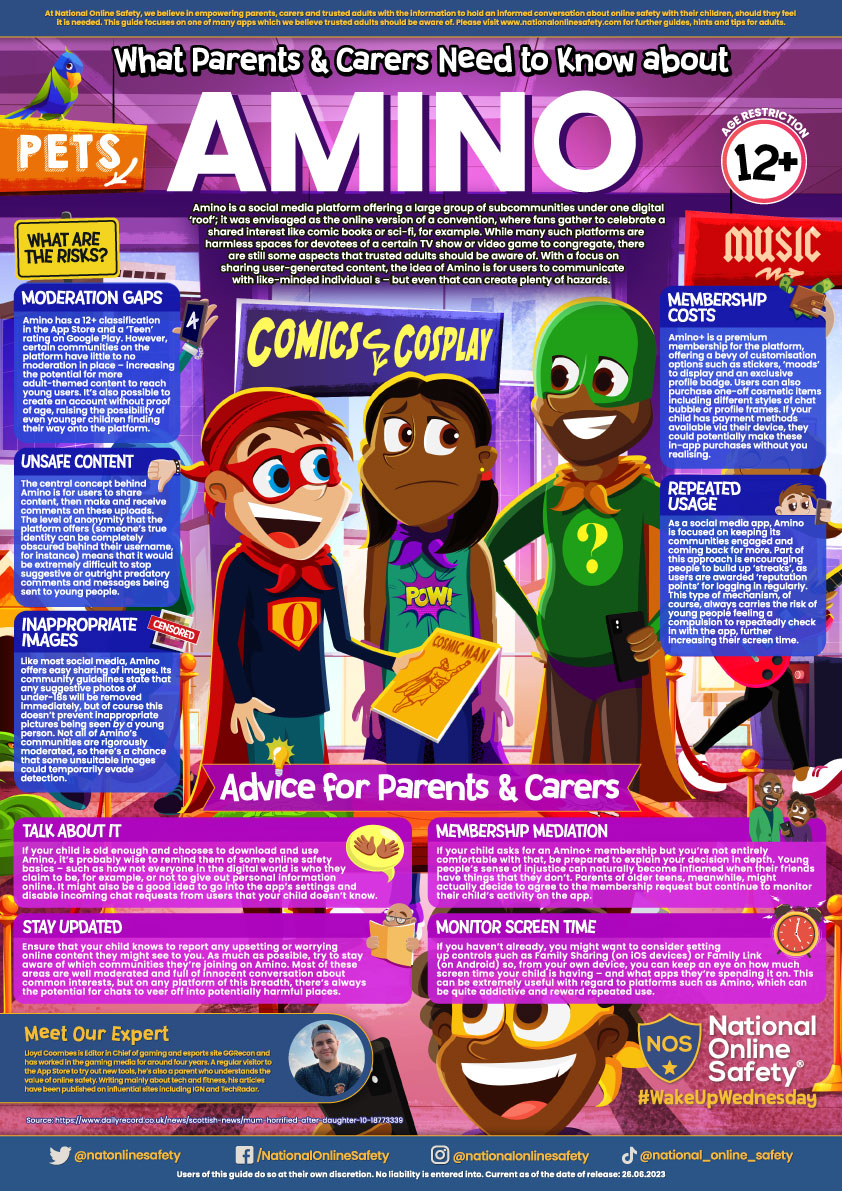
 The social networking platform Amino offers opportunities to exchange views on countless hobbies and interests … but its lack of age verification represents an obvious risk for younger users
 Rumble is a video-sharing platform which has achieved stellar growth in recent years – as well as drawing a similarly eye-catching amount of criticism for the views of some of its best-known account holders