
Good Morning Year 3!
Maths
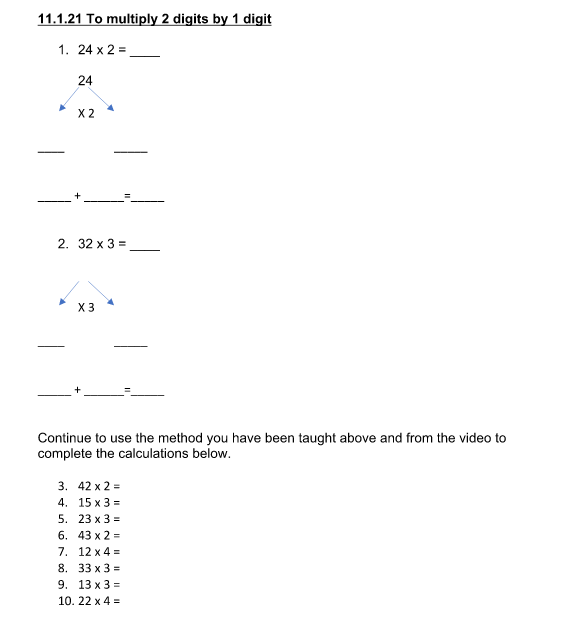
Today’s maths is a getting to know the method for multiplying 2 digits by 1 digit without exchanging.
Starter: Time yourself to write down your 4 and 8 X tables can you notice the pattern? Does this make you write them quicker knowing this pattern? Do this twice up to 12 x 8 and 12 x 8 – write your fastest time in the comments box below.
Main Activity: Watch the video link: http://https://vimeo.com/486331580
Complete the worksheet attached using the method shown in the video to work out your answers – don’t forget to take a photo of your working out and upload it to your assignment.
English
Today in English we are starting our new unit- Myths and Legends! We will be introducing a new story called Beowulf that we know you are all going to love! Remember to watch the video lesson on your Google Classroom before you begin your work.
Your Task
You are going to create your own hero that could defeat Grendel. Remember to exaggerate to make your hero sound as great as possible (heroes in myths are usually exaggerated because they must appear naturally greater than normal people).
Extension
If you finish your paragraph you might want to create a sketch of your hero.
We would love to see your work so don’t forget to share it with us at [email protected]
Science
Today, we will be completing our second science lesson on animals including humans. We will be learning about the three different skeleton types. Begin the lesson with the attached PowerPoint.
Starter: Watch the ‘What is a vertebrate?’ and ‘What is an invertebrate?’ videos. You will find the videos on the following website:
https://www.bbc.co.uk/bitesize/topics/zn22pv4
Continue the PowerPoint slides until you reach the starter page. You will then be required to categorise the animals into endoskeletons, exoskeletons and hydrostatic skeletons. You can print the attached word document or simply create your own table to categorise the animals.
Main Activity:
Today, you are going to create a poster. You must include the following:
– The three skeleton types (endoskeleton, exoskeleton and hydrostatic skeleton)
– Definitions of the three skeleton types
– Examples of animals for each skeleton type
– Scientific language (vertebrate/invertebrate)
– Interesting facts!
* You can use your electronic devices to research further information.
Challenge:
Here are four animals: a snail, lizard, caterpillar and squid. Which one of these four animals are NOT an invertebrate?
Enjoy learning all about different types of skeletons and send some of your amazing posters to [email protected]
We can’t wait to see all of your fabulous work!