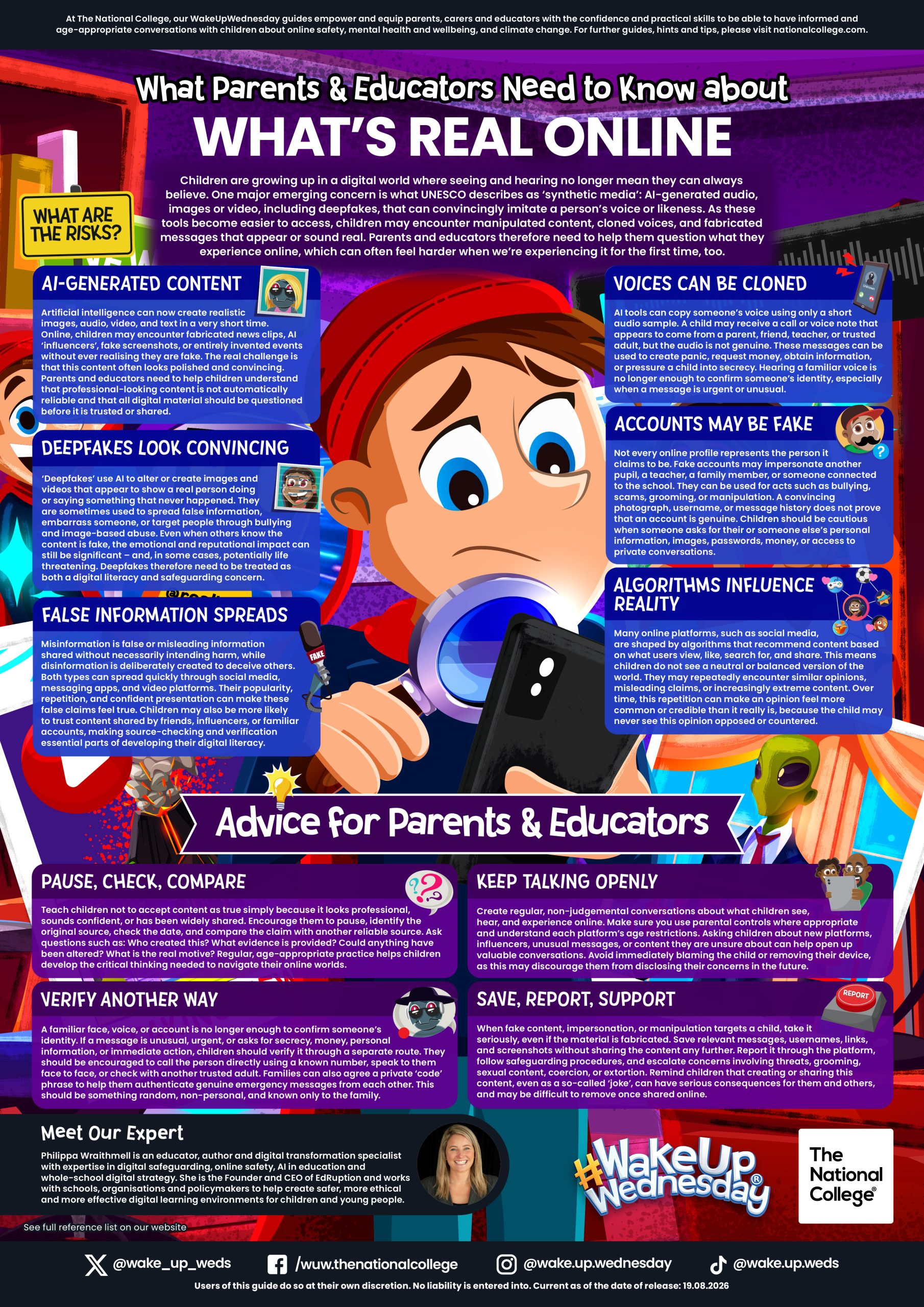
From deepfake videos and cloned voices to fabricated screenshots and fake accounts, it is becoming increasingly difficult to tell what is genuine online. This guide explores how AI-generated content, misinformation and impersonation can affect children and young people, while explaining why polished presentation, familiar voices and repeated claims should never automatically be taken as proof that something is trustworthy.
It also offers practical advice for parents and educators on strengthening children’s digital literacy and safeguarding them from manipulation. Discover how to encourage source-checking, verify unusual messages through another route, discuss online experiences openly and respond appropriately when harmful or deceptive content targets a child – including preserving evidence, reporting concerns and seeking further support where necessary.