Millennials are Messenger’s largest audience group, with the 25–34 age bracket comprising around a third (32%) of the app’s user-base. That’s not to say it’s unpopular with youngsters, however. Back in 2017, Facebook tried to launch a version for under-12s – Messenger Kids – but it was met with negative feedback: particularly in the UK, where it remains unavailable.
Users as young as 13 (and in all probability, many who are even younger) having access to an app which lets them chat privately with each other, exchange photos and potentially be contacted by older people who they don’t know brings its own obvious issues.
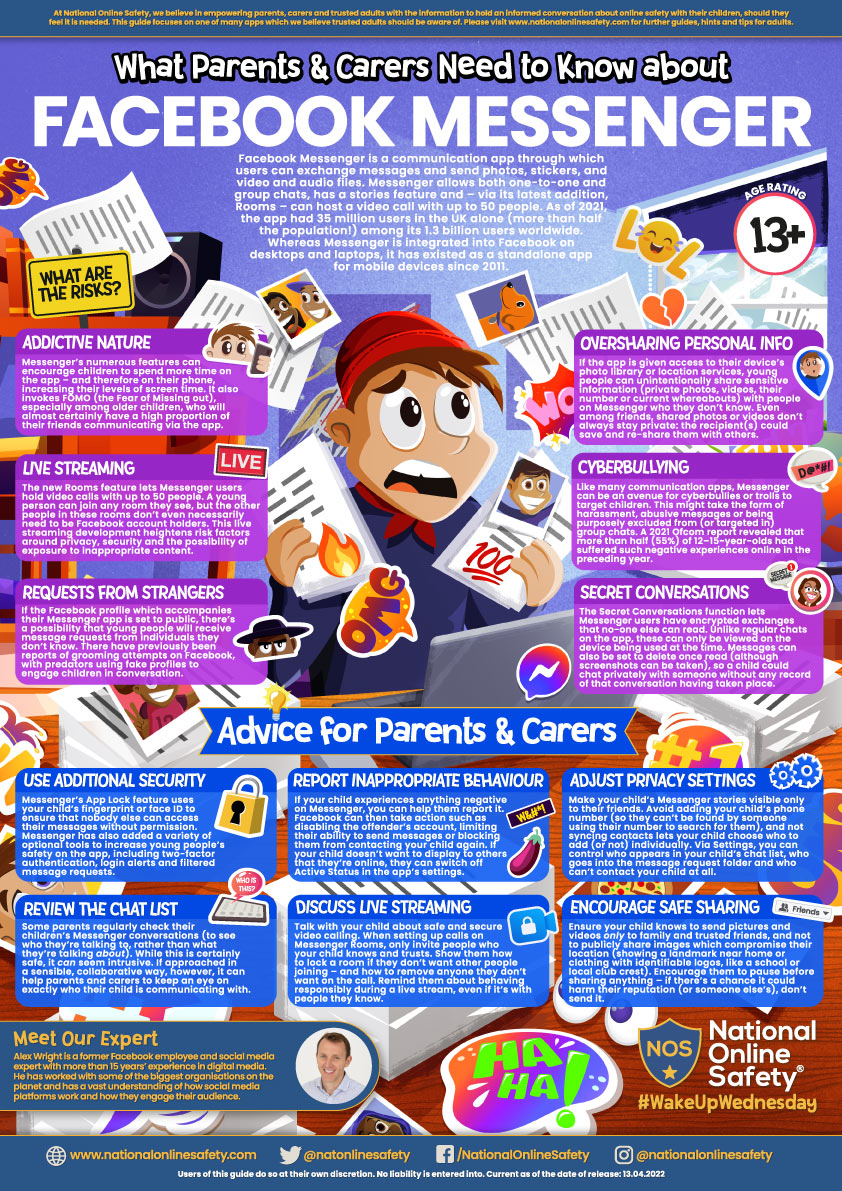
Facebook Messenger is a communication app through which users can exchange messages and send photos, stickers, and video and audio files. Messenger allows both one-to-one and group chats, has a ‘stories’ feature and – via its latest addition, Rooms – can host a video call with up to 50 people. As of 2021, the app had 35 million users in the UK alone (more than half the population!) among its 1.3 billion users worldwide. Whereas Messenger is integrated into Facebook on desktops and laptops, it has existed as a standalone app for mobile devices since 2011.
In the guide, you’ll find tips on a number of potential risks such as addiction, strangers and secret conversations.
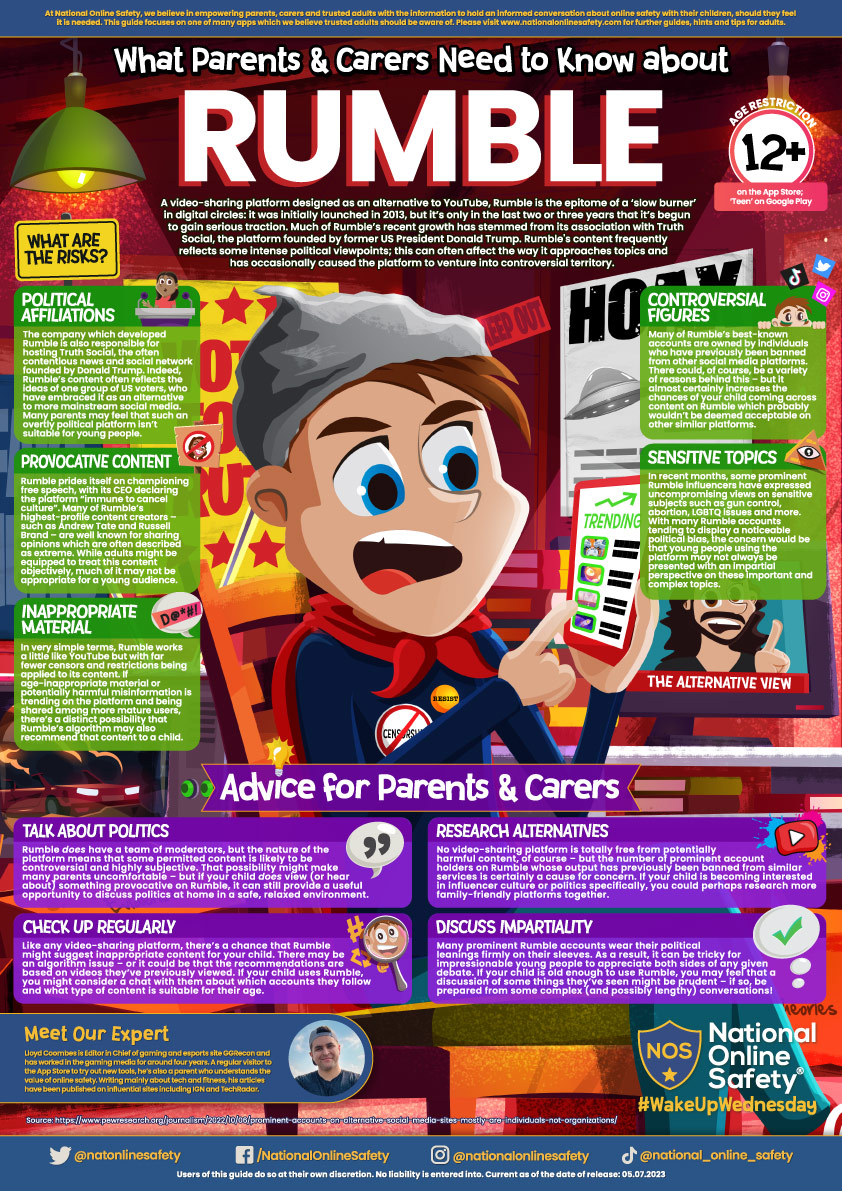
 Rumble is a video-sharing platform which has achieved stellar growth in recent years – as well as drawing a similarly eye-catching amount of criticism for the views of some of its best-known account holders